I was trying to decide on topic for a new blog and because we just found some new teapots I decided that the focus this time would be Hycroft China Limited. Teapots, no matter what kind of china or dishes they are, would be an add on to the place settings so there are not as many around as there things like dinner plates. I find that I tend to like the kitchen things like teapots and cookie jars I am not sure why that is....perhaps it is the memories that those pieces elicit....time spent at one of my grandparents homes. There were many hours spent having tea parties and baking cookies with my English grandmother and an equal number of hours spent baking pastry, bread and buns with my German grandmother. My German grandmother would always let me dunk my cookies in her coffee but my English grandmother never let me do that!


Hycroft China Limited was named by Marwell when he took over the Medicine Hat Potteries plant in 1951. Malcolm McArthur suggested he rename the plant and so it was named after one of Marwell's west coast ventures. However 18 months later he could not make a success of the plant and it was sold to Harry Veiner.


Harry Veiner was at the time, the Mayor of Medicine Hat, operated a green house business as well as a ranch. One of the first things he did was trim the staff numbers and set about putting the pottery back into a profitable business. His authoritarian style did not sit well with everyone and several months later Malcolm McAthur left the pottery, he took along with him some of the experienced workmen and quickly settled into Alberta Potteries at Redcliff.

Hycroft had a varied line of products and excelled at advertising items. The hand decorated pieces were pretty much phased out by 1985, it is believed that if you could list all of the specially named pieces that Hycroft produced it would be a larger number than Medalta produced and they are reported to have produced 700 different ones.
 Daizy: No Pattern Number (Copied with permission of the writer)
The Daizy pattern is listed in the Hycroft records from 1964-1970, and on the invoices it is usually listed as Daisy not Daizy as on the Hycroft backstamp. Even though it was sold for some seven years, it apparently was not that popular a pattern judging by the number of times you find it listed in the Hycroft invoices; and, furthermore, you do not find it in the marketplace very often. Just recently I saw the first ebay auction of this pattern and that piece, a 6½” side plate sold for about $7.75 Canadian. As is so often the case with smaller pieces, the vendor did not know the pattern name as it was not included as part of the backstamp. Daizy is found on the round coupe style of dishes and is listed as one of Hycroft’s hand decorated patterns. Placed on plain white plates, the pattern consists of a pair of 4-petal yellow flowers, each with brownish centers partly extending into the petals, and each with a branching black stem. The flowers were likely put on the plate using a leadfoil stencil, while the black stems were drawn on by hand.
Daizy: No Pattern Number (Copied with permission of the writer)
The Daizy pattern is listed in the Hycroft records from 1964-1970, and on the invoices it is usually listed as Daisy not Daizy as on the Hycroft backstamp. Even though it was sold for some seven years, it apparently was not that popular a pattern judging by the number of times you find it listed in the Hycroft invoices; and, furthermore, you do not find it in the marketplace very often. Just recently I saw the first ebay auction of this pattern and that piece, a 6½” side plate sold for about $7.75 Canadian. As is so often the case with smaller pieces, the vendor did not know the pattern name as it was not included as part of the backstamp. Daizy is found on the round coupe style of dishes and is listed as one of Hycroft’s hand decorated patterns. Placed on plain white plates, the pattern consists of a pair of 4-petal yellow flowers, each with brownish centers partly extending into the petals, and each with a branching black stem. The flowers were likely put on the plate using a leadfoil stencil, while the black stems were drawn on by hand.


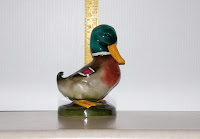
Game Birds 1955-1979

Little Red Hen 1956-1958


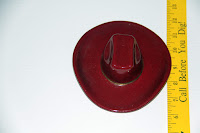
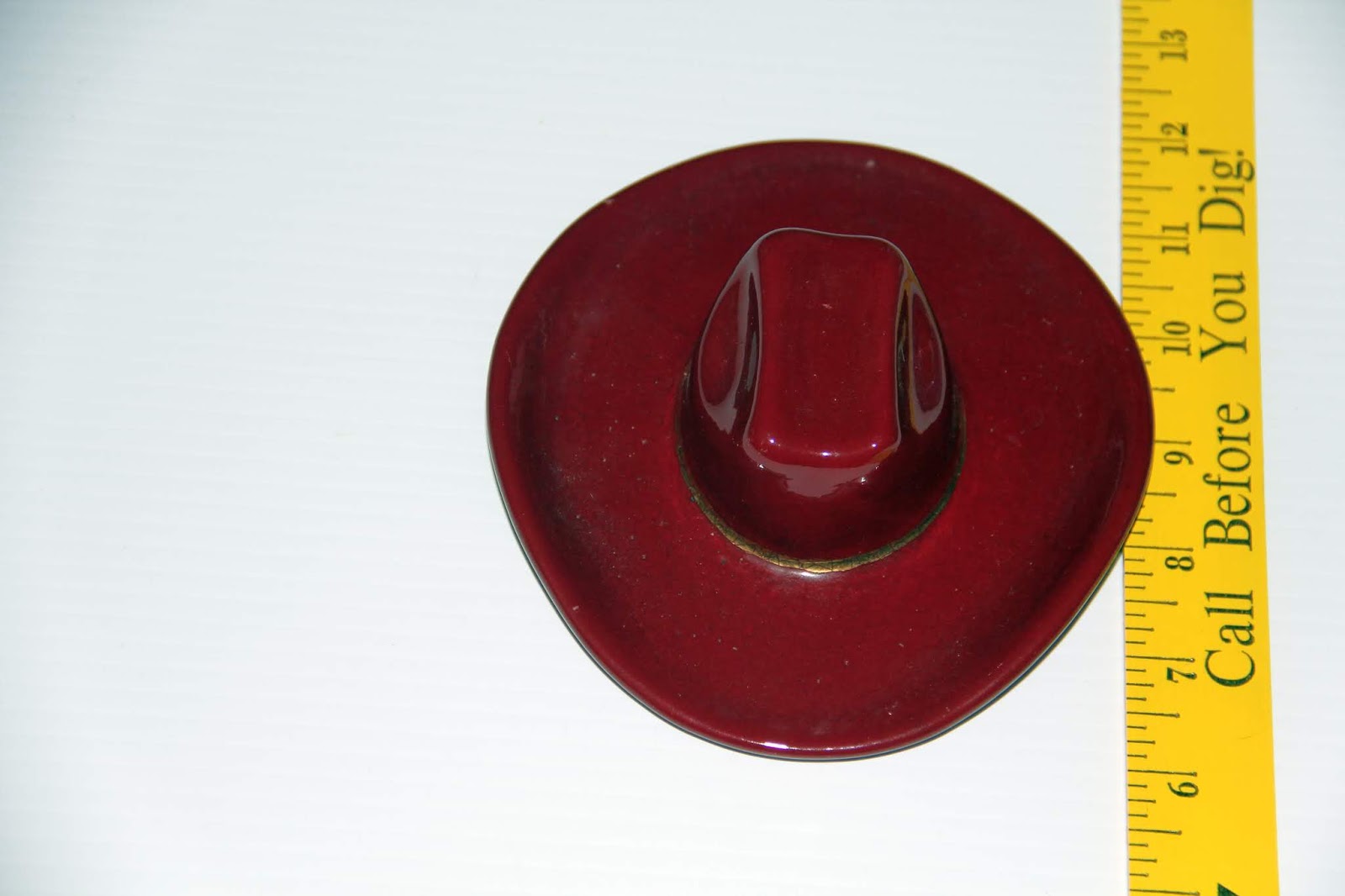
I have included a few different photos of Hycroft pieces, many are not marked but were made by a person that worked at the plant.
As always the joy is truly in the search and the people we meet. Please add your comments of photos of Hycroft pieces you may have in your own collection. The photos in the blog are from our own private collection. We look forward to comments!
The Search Continues...


 " Lamp #9 is the earliest of the numbered Medalta lamps, who’s shape started as the hand made 4 ½" lamp. It was introduced in 1932, and was produced until 1937. Its height is 4 1/4" (109 mm), and it is a named lamp, the “Globe” lamp. Most of these do not have an in-mould mark, and many are unmarked. All of the examples of this lamp I have examined have a circular casting ridge at the same position, about 1 3/4" up from the base, indicating that it was jigged in two pieces and then assembled. Assembly was probably done on a wheel, while the clay was still wet."


 Hycroft China Limited was named by Marwell when he took over the Medicine Hat Potteries plant in 1951. Malcolm McArthur suggested he rename the plant and so it was named after one of Marwell's west coast ventures. However 18 months later he could not make a success of the plant and it was sold to Harry Veiner.
 Harry Veiner was at the time, the Mayor of Medicine Hat, operated a green house business as well as a ranch. One of the first things he did was trim the staff numbers and set about putting the pottery back into a profitable business. His authoritarian style did not sit well with everyone and several months later Malcolm McAthur left the pottery, he took along with him some of the experienced workmen and quickly settled into Alberta Potteries at Redcliff.


 I have included a few different photos of Hycroft pieces, many are not marked but were made by a person that worked at the plant.